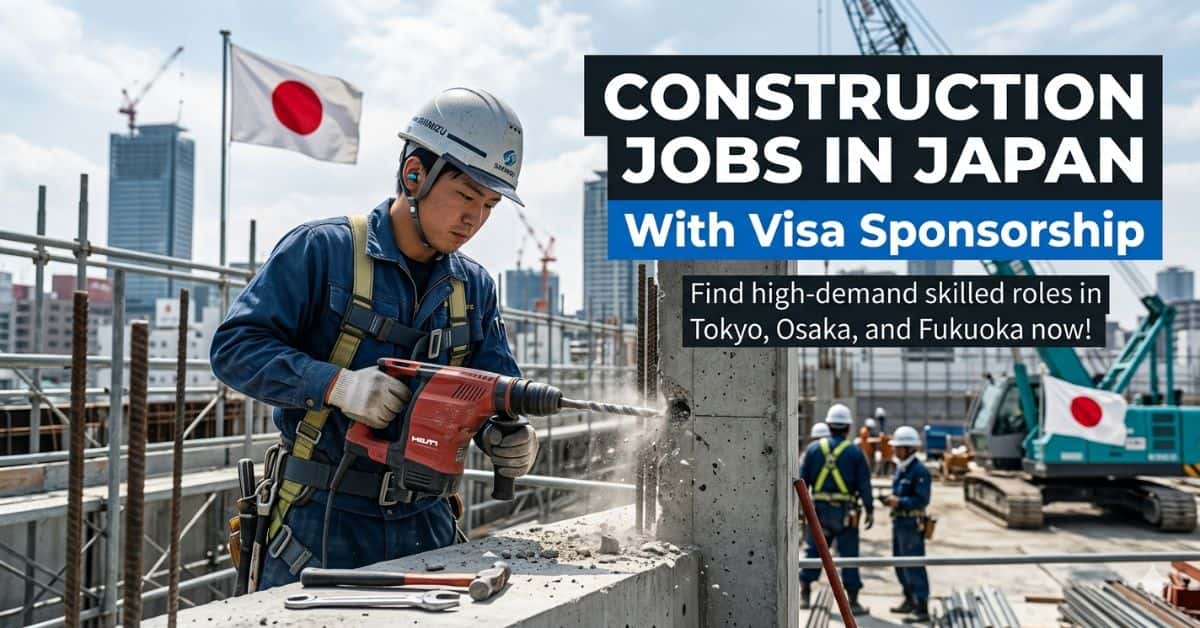
Construction Jobs in Japan with Visa Sponsorship in 2026 offer stable full-time physical work opportunities for foreign workers under the Specified Skilled Worker (SSW) visa program. The average salary ranges from ¥180,000 to ¥350,000 per month, depending on skill level, overtime, and job category.
These roles are physical, on-site positions (not remote) and are suitable for candidates with 0–3 years of experience who are physically fit, safety-focused, and ready to work in a structured industrial environment.
Types of Construction Jobs in Japan:
- Carpenters and Formwork Specialists
- Rebar and Steel Fixers
- Welders
- Heavy Equipment Operators
- Electricians
- Plumbers and Pipefitters
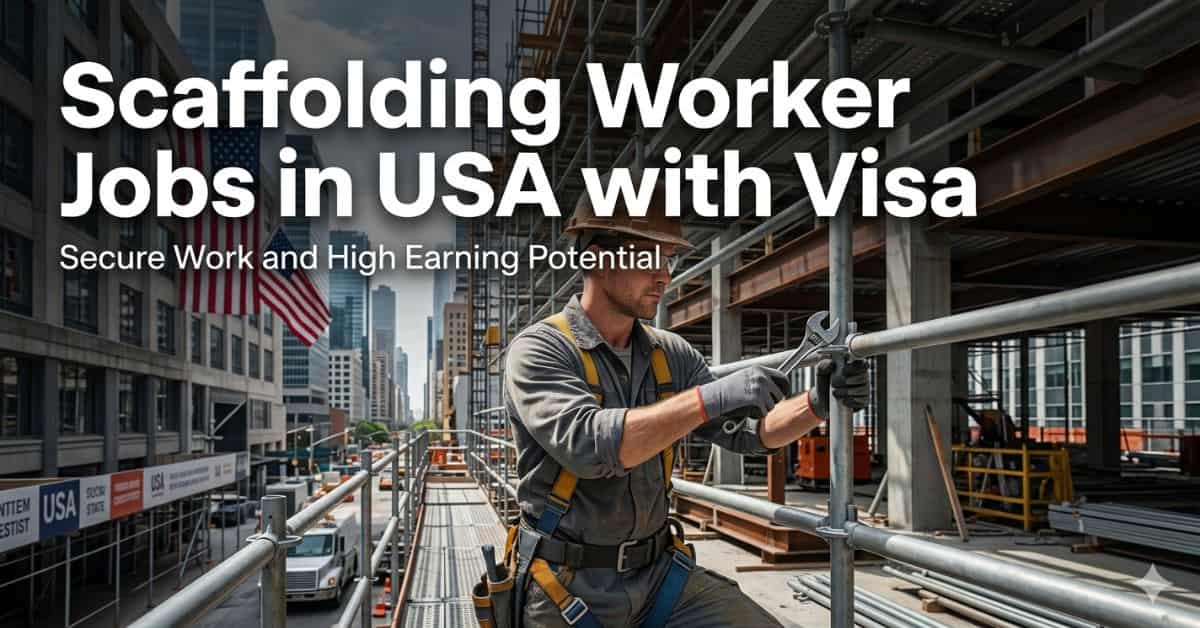
- Scaffolders
Duties of Construction Jobs in Japan:
- You will first be taught how to precisely and properly assemble the components.
- Second, you shall use equipment carefully and notify your immediate supervisors of any issues.
- Thirdly, you will verify that the final products are up to par.
- Additionally, you will be packing goods for delivery or storage.
- You will also adhere to stringent safety regulations and maintain hygiene.
- Finally, you will collaborate with international and Japanese colleagues to achieve daily objectives.
Requirements for Construction Jobs in Japan:
- First, you will need a real job offer from a Japanese company that will sponsor your Specified Skilled Worker (SSW) visa.
- Second, fluency in Japanese is required.
- Third, to be able to stand for extended periods of time and perform mild to moderate lifting, you must be in exceptional physical condition.
- Additionally, you must pass a medical check and have a spotless criminal record.
- You also need to have a strong work ethic and be trustworthy.
- Finally, you need to have a high school degree or its equivalent.
Benefits of Construction Jobs in Japan:
1. Visa Sponsorship Support
Employers assist in obtaining the Specified Skilled Worker visa, making the relocation process smoother and more structured.
2. Free On-the-Job Training
Workers receive training in Japanese construction methods, tools, and safety standards before full deployment.
3. Stable Monthly Income
A reliable salary structure ensures financial stability with opportunities for overtime earnings.
4. Health Insurance Coverage
Employees are enrolled in Japan’s strong healthcare system, reducing medical expenses significantly.
5. Pension Benefits
Long-term workers contribute to and benefit from Japan’s pension system for future financial security.
6. Career Growth Opportunities
Skilled workers can progress to higher roles with experience and performance-based promotions.
7. Safe Working Environment
Strict safety regulations ensure minimal risk and well-managed construction sites.
8. Multicultural Work Experience
You work alongside both Japanese staff and international workers, improving communication skills.
9. Paid Overtime Opportunities
Extra working hours are often available, increasing monthly earnings.
10. Skill Development
Workers gain advanced technical skills that remain valuable internationally.
How to Apply for Construction Jobs in Japan with Visa Sponsorship?
To apply, you first need to secure a job offer from a licensed Japanese employer under the SSW program. After selection, your employer guides you through visa sponsorship, documentation, and onboarding. Once approved, you receive training and travel arrangements before starting work in Japan.
Conclusion:
Construction work in Japan is a strong opportunity for individuals looking for stable income, skill development, and international work experience. With proper training, visa support, and structured working conditions, it becomes a reliable career path for motivated workers ready for hands-on physical roles.
Frequently Asked Questions:
Is Japanese language required?
Yes, basic Japanese (N4–N3 level) is usually required for communication and safety.
Is this a remote job?
No, construction work in Japan is fully physical and site-based.
Can foreigners get visa sponsorship?
Yes, through the Specified Skilled Worker (SSW) visa program with employer sponsorship.