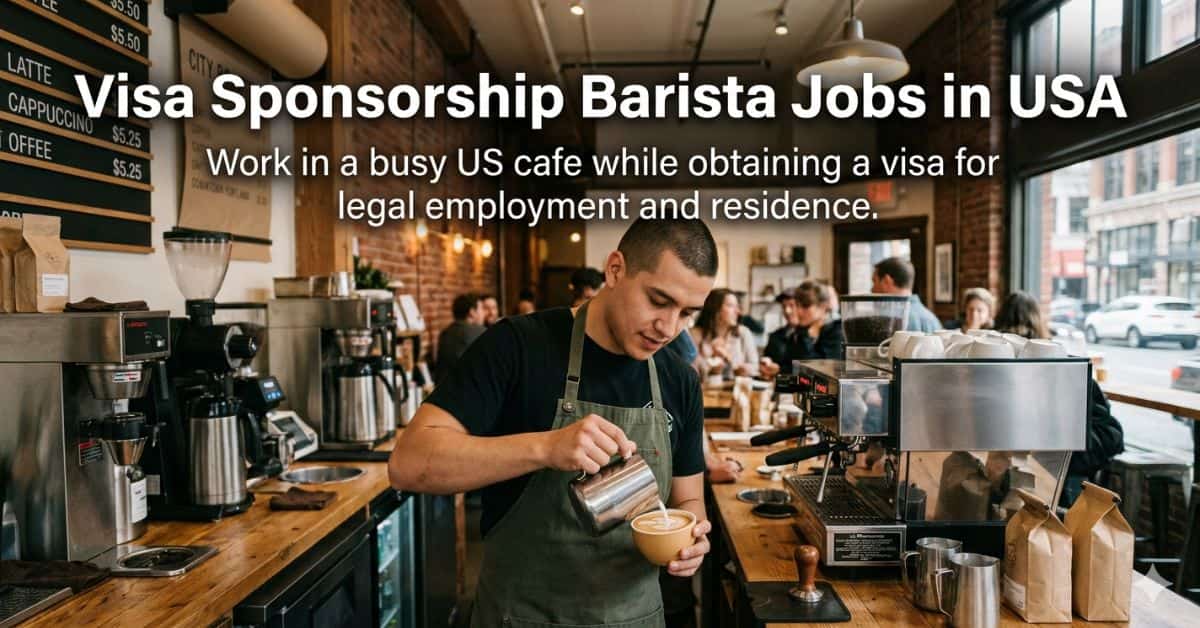
Are you a skilled barista dreaming of working in the United States? You’re not alone. The U.S. coffee industry continues to grow at a remarkable pace, and many employers are actively seeking talented baristas from around the world including those who require visa sponsorship.
This comprehensive guide covers everything you need to know about landing a visa-sponsored barista job in the USA in 2026.
What Are Visa Sponsorship Barista Jobs?
Visa sponsorship barista jobs are positions offered by U.S.-based coffee shops, hotel chains, restaurant groups, and hospitality companies that are willing to legally sponsor a foreign national’s work visa. This means the employer covers the cost and administrative process of obtaining a valid U.S. work authorization on your behalf, allowing you to legally live and work in the country.
These positions are most commonly found in large metropolitan areas such as New York City, Los Angeles, Chicago, Seattle, and Miami cities with high demand for experienced coffee professionals.
Why the USA Needs International Baristas in 2026?
The market for speciality coffee in the United States is expanding. The demand for qualified baristas greatly exceeds the local supply due to the thousands of new cafés that emerge each year and the growing popularity of artisan coffee. The following explains why American employers are moving overseas:
- Skill shortages in specialty espresso preparation, latte art, and manual brewing methods
- Rapid expansion of global coffee chains requiring multilingual staff
- High turnover rates in the food and beverage sector
- Growing demand for culturally diverse hospitality experiences
For foreign applicants who bring knowledge, enthusiasm, and professionalism to the espresso bar, this gap offers genuine opportunity.
Types of Visas Available for Barista Jobs in USA:
Before applying, it’s important to know which visa type applies to you. The most pertinent visa categories are as follows:
- H-2B Visa (Temporary Non-Agricultural Worker) The most commonly used visa for barista and hospitality roles. It allows U.S. employers to bring foreign nationals to the U.S. to fill temporary non-agricultural jobs. Annual caps apply, so early applications are strongly advised.
- H-1B Visa (Specialty Occupation) Generally not applicable for standard barista roles, but may be relevant for managerial or training positions within a coffee corporation that requires a bachelor’s degree.
- J-1 Visa (Exchange Visitor) Suitable for baristas participating in cultural exchange programs, internships, or training programs with hospitality brands.
- O-1 Visa (Extraordinary Ability) For baristas who have achieved international recognition in the specialty coffee industry, such as competition winners or published coffee educators.
- EB-3 Visa (Skilled/Unskilled Workers Green Card) For long-term employment sponsorship leading to permanent residency. Some larger employers sponsor baristas under this category after a qualifying employment period.
Top Employers Offering Visa Sponsorship for Baristas in 2026:
For eligible barista candidates, a number of significant corporations and hospitality organisations are known to sponsor visas:
- Starbucks Corporation: One of the largest coffee employers in the world, with structured international hiring programs and relocation support.
- Marriott International / Marriott Hotels: Hotel chains with on-site cafés and restaurants regularly sponsor F&B staff including baristas.
- Hilton Hotels & Resorts: Active in H-2B and EB-3 sponsorship for hospitality roles.
- Hyatt Hotels Corporation: Known for its international workforce and inclusive hiring practices.
- Blue Bottle Coffee: A specialty coffee company with a reputation for valuing craft; selectively sponsors exceptional candidates.
- Peet’s Coffee: Expanding rapidly with cafés across major U.S. cities; periodically sponsors skilled staff.
- Third-wave independent cafés: Boutique coffee shops in cities like Portland, Austin, and Nashville sometimes sponsor highly skilled baristas for long-term roles.
Pro Tip: Large hotel chains are often your best bet for visa sponsorship because they have established HR and legal infrastructure to handle immigration paperwork efficiently.
Salary Expectations for Baristas in the USA in 2026:
Location, employer size, and experience level all affect compensation. Here is a broad summary:
| Position | Hourly Wage | Annual Estimate (with tips) |
|---|---|---|
| Entry-Level Barista | $14 – $17/hr | $30,000 – $38,000 |
| Experienced Barista | $17 – $22/hr | $38,000 – $50,000 |
| Lead Barista / Shift Supervisor | $20 – $26/hr | $45,000 – $58,000 |
| Coffee Bar Manager | $22 – $30/hr | $52,000 – $68,000 |
Note: Tip income in high-traffic city cafés can significantly increase total earnings.
Cities with the highest barista wages include San Francisco, New York City, Seattle, and Boston, largely due to higher costs of living and strong union protections.
Read Also: Visa Sponsorship Wine Server Jobs in USA
Requirements and Qualifications for Barista Jobs in USA:
Candidates usually need to fulfil the following requirements in order to be accepted for a visa-sponsored barista position in the USA:
Professional Skills:
- Proficiency in espresso machine operation and manual brewing techniques (pour-over, AeroPress, cold brew)
- Knowledge of coffee origins, roasting profiles, and flavor notes
- Latte art skills (a significant advantage)
- Experience with point-of-sale (POS) systems
Work Experience:
- Minimum 1–3 years of professional barista experience (varies by employer)
- Experience in a high-volume café or hotel environment preferred
Language:
- Conversational to fluent English is typically required
- Bilingual candidates are highly competitive
Certifications (Preferred but Not Always Required):
- SCA (Specialty Coffee Association) Barista Skills certification
- Food Handler’s Permit or ServSafe certification
- Latte Art competition credentials
How to Apply for Visa Sponsorship Barista Jobs in USA?
Follow this step-by-step approach to maximize your chances:
Step 1: Build a Strong Resume Tailor your CV to highlight specialty coffee skills, equipment knowledge, and measurable achievements (e.g., “Served 300+ customers daily at a high-volume café in Melbourne”).
Step 2: Get SCA Certified An SCA Barista Skills certification significantly strengthens your application and signals professional-level commitment to U.S. employers.
Step 3: Search the Right Job Boards Use these platforms to find sponsored positions:
- Indeed.com (search: “barista visa sponsorship USA”)
- LinkedIn Jobs
- Glassdoor
- H2BjobsUSA.com
- USAJobs.gov (for government-affiliated hospitality roles)
- Poached Jobs (hospitality-specific)
Step 4: Apply Directly to Hotel Chains Visit the careers pages of Marriott, Hilton, Hyatt, and similar brands and filter by “visa sponsorship available.”
Step 5: Work with an Immigration-Friendly Recruiter Staffing agencies that specialize in hospitality placements often have relationships with sponsors. Look for agencies experienced in H-2B and EB-3 placements.
Step 6: Prepare for Interviews Be ready for video interviews. Practice discussing your coffee knowledge, customer service philosophy, and willingness to relocate. Bring documentation of your experience, certifications, and passport.
Common Challenges and How to Overcome Them:
- Challenge: H-2B Visa Cap The H-2B visa has an annual statutory cap. Applications open early in the fiscal year and slots fill quickly. Solution: Apply as early as October for positions starting the following year. Work with an immigration attorney to ensure timely filing.
- Challenge: Finding Genuine Sponsors Not all job listings claiming “visa sponsorship” are legitimate. Solution: Verify employers on the U.S. Department of Labor’s iCERT Portal and check USCIS-approved employer lists before accepting any offer.
- Challenge: Credential Recognition Your home country certifications may not be recognized. Solution: Obtain internationally recognized credentials like SCA certifications before applying.
Conclusion:
Visa sponsorship barista jobs in the USA in 2026 represent a genuine pathway for skilled coffee professionals from around the world to build rewarding careers in one of the most dynamic hospitality markets on the planet. While the process requires patience, preparation, and persistence, thousands of international baristas successfully make the move each year.
Start with the right visa category, target established hotel and coffee chain employers, invest in internationally recognized certifications, and apply early. Your dream of crafting espresso in New York, Seattle, or San Francisco may be closer than you think.
Frequently Asked Questions:
Can foreigners apply for hospitality jobs abroad?
Yes. Many countries actively recruit international hospitality workers, especially in hotels, resorts, restaurants, and tourism sectors. Some employers also provide visa sponsorship for qualified candidates.
What qualifications are needed for hospitality careers?
Requirements vary by role. Entry-level positions often require a high school diploma and good communication skills, while managerial and specialized roles may require hospitality certifications, vocational training, or industry experience.
Are hospitality jobs suitable for career growth?
Yes. Employees can advance from entry-level positions to supervisory and management roles through experience, training, and strong performance. Many hospitality companies offer structured promotion pathways.