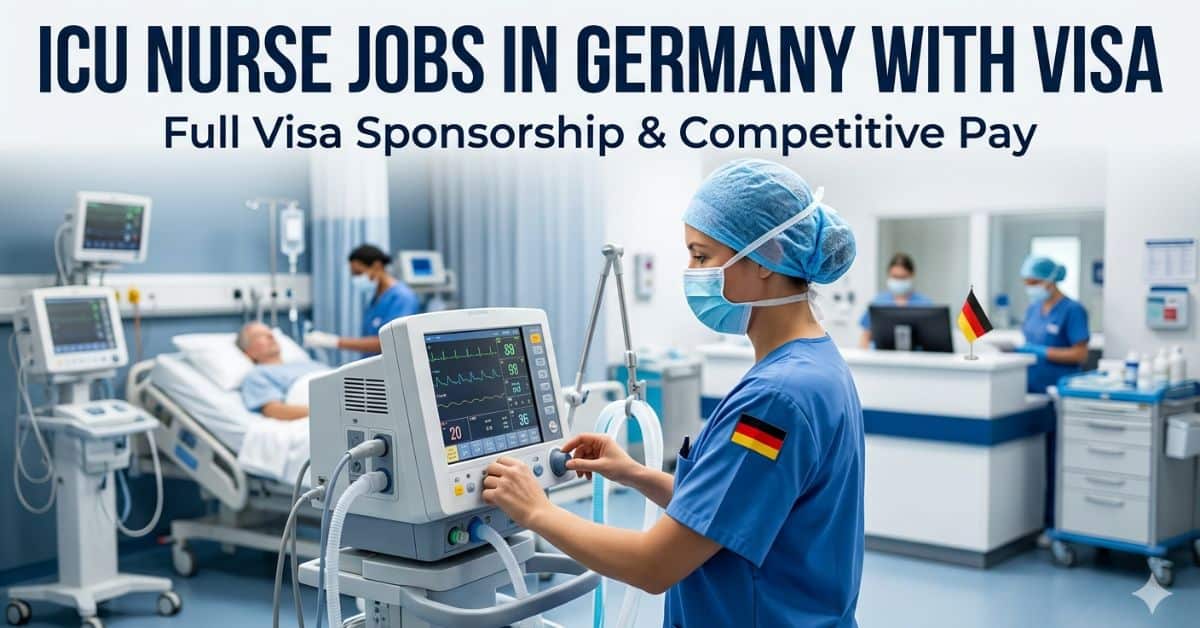
ICU Nurse Jobs in Germany with Visa 2026 are full-time, hospital-based healthcare roles designed for qualified intensive care nurses with 1–2 years of experience, offering a monthly salary between €2,800 and €5,500 (gross in EUR) depending on experience and specialization.
These are physical, on-site jobs (not remote) in advanced ICU departments across Germany, with strong visa sponsorship support for international candidates. For nurses seeking stability, respect, and long-term career growth, Germany offers one of the most structured and rewarding healthcare systems in Europe.
Why Germany: The Growing Demand for ICU Nurses
There is a severe lack of qualified medical personnel in Germany, especially in intensive care units. German hospitals are actively looking for qualified ICU nurses from overseas due to the country’s elderly population and quickly growing healthcare industry. 2026 is one of the finest years to pursue a nursing profession in Germany because there are still thousands of open vacancies nationwide. In an effort to draw in foreign medical talent, the German government has simplified immigration procedures.
Eligibility Requirements for ICU Nurse Jobs in Germany:
A recognized nursing degree or diploma (Bachelor of Nursing or equivalent), at least one to two years of ICU or critical care experience, a willingness to learn German (at least B2 level is typically required for clinical roles), and a current nursing license from their home country are usually prerequisites for ICU nurse positions in Germany. While non-EU nurses must go through a formal credential recognition process called “Anerkennung,” nurses from EU/EEA nations benefit from streamlined recognition procedures.
Visa Options:
For foreign ICU nurses, Germany provides a number of visa options. The EU Blue Card for highly trained professionals, the Skilled Worker Visa (Fachk Münftevisum) under the Skilled Immigration Act, and the Recognition Visa which enables nurses to finish the credential recognition procedure while working in Germany are the most popular routes. With quicker processing timeframes and fewer administrative obstacles in 2026, competent nurses can now get German work visas much more easily thanks to the 2023 Skilled Immigration Act amendments.
Read Also: Visa Sponsorship Cook Jobs in Germany
Salary Expectations:
ICU nurses in Germany are among the best-compensated in Europe. Entry-level ICU nurses can expect to earn between €2,800 and €3,500 per month (gross), while experienced nurses with specialized ICU certifications can earn €4,000 to €5,500 or more monthly. Most positions also include night shift allowances, holiday bonuses, and comprehensive health and pension benefits. Salaries are typically governed by the TVöD (public sector collective agreement) or similar hospital-specific tariffs.
Top Cities and Regions:
- Major cities with strong ICU nursing demand and large university hospitals:
- Berlin
- Munich
- Hamburg
- Frankfurt
- Cologne
- German states with especially high recruitment for international ICU nurses:
- Bavaria
- North Rhine-Westphalia
- Baden-Württemberg
- Smaller cities and rural regions across Germany often provide extra benefits such as:
- Relocation assistance
- Housing support
- Faster hiring processes due to staff shortages
German Language Requirements:
One of the most important prerequisites for nursing in Germany is language competency. According to the Common European Framework of Reference, the majority of employers require at least B2 level German, however some ICU positions at teaching hospitals may require C1 level for complete professional registration. Many nurses start learning German before applying and keep getting better once they get there. Online and through organizations like the Goethe-Institut, there are a plethora of German language courses accessible, and some employers even fund language instruction.
Credential Recognition: Getting Your Nursing Qualification Approved in Germany
Before you may work as a registered nurse, German authorities must formally accept your foreign nursing credentials. Your diploma, transcripts, proof of work experience, and a certified German translation of your documents must be submitted as part of the recognition process, which is managed by the appropriate state authority (Landesbeńde).
If your qualifications are judged to be somewhat comparable, you could have to take an aptitude exam or go through an adaptation phase, which is usually three to six months long and takes place in a clinical setting.
How to Find ICU Nurse Jobs in Germany?
- Official job portals like Make it in Germany, which lists thousands of healthcare and ICU nursing vacancies
- Major German hospital group websites, including:
- Charité
- Helios Kliniken
- Asklepios Kliniken
- Sana Kliniken
- Specialized healthcare recruitment agencies that focus on international nursing placements, often helping with:
- Visa sponsorship
- Credential recognition in Germany
- Relocation and onboarding support
The Application Process for ICU Nurse Jobs in Germany with Visa:
The typical application process involves several key stages. First, research and shortlist hospitals or clinics actively recruiting international nurses. Second, begin your German language training and reach at least B1–B2 level. Third, gather and certify all required documents including your nursing diploma, license, and work experience letters. Fourth, apply for credential recognition with the appropriate state authority. Fifth, secure a job offer from a German employer. Sixth, apply for the appropriate German work visa at your local German embassy or consulate. Finally, arrange your relocation and begin your adaptation period or start work directly upon arrival.
Benefits of ICU Nurse Jobs in Germany:
1. High Salary Stability
ICU nurses receive consistent monthly income with additional allowances for shifts, overtime, and holidays. This ensures financial security even in demanding roles.
2. Strong Job Security
Germany’s healthcare system faces ongoing staff shortages, making ICU nursing one of the most stable professions for long-term employment.
3. Visa Sponsorship Support
Hospitals actively sponsor international nurses, simplifying relocation and legal employment pathways for qualified candidates.
4. Free or Supported Language Training
Many employers help nurses achieve required German proficiency through funded language programs and training support.
5. Permanent Residency Pathway
Skilled nursing roles often lead to long-term residency options, allowing professionals to build a stable future in Europe.
6. Modern ICU Facilities
Hospitals are equipped with advanced medical technology, giving nurses exposure to high-standard critical care environments.
7. Paid Annual Leave
Nurses typically receive around 30 days of paid leave per year, supporting work-life balance.
8. Career Growth Opportunities
Continuous training and specialization programs help nurses move into senior ICU roles or leadership positions.
9. Family Relocation Options
Many visa programs allow nurses to bring family members, making relocation more stable and secure.
10. Respectful Work Culture
German healthcare systems value precision, teamwork, and professionalism, creating a respectful environment for nurses.
Frequently Asked Questions
Can international nurses get visa sponsorship in Germany?
Yes, many hospitals actively sponsor skilled ICU nurses through Germany’s Skilled Worker Visa system.
What is the average salary for ICU nurses in Germany?
Most ICU nurses earn between €2,800 and €5,500 per month depending on experience, location, and certifications.
Is Germany a good country for long-term nursing careers?
Yes, Germany offers strong job security, residency pathways, and continuous career development in healthcare.